webweaver.social — iOS app in beta
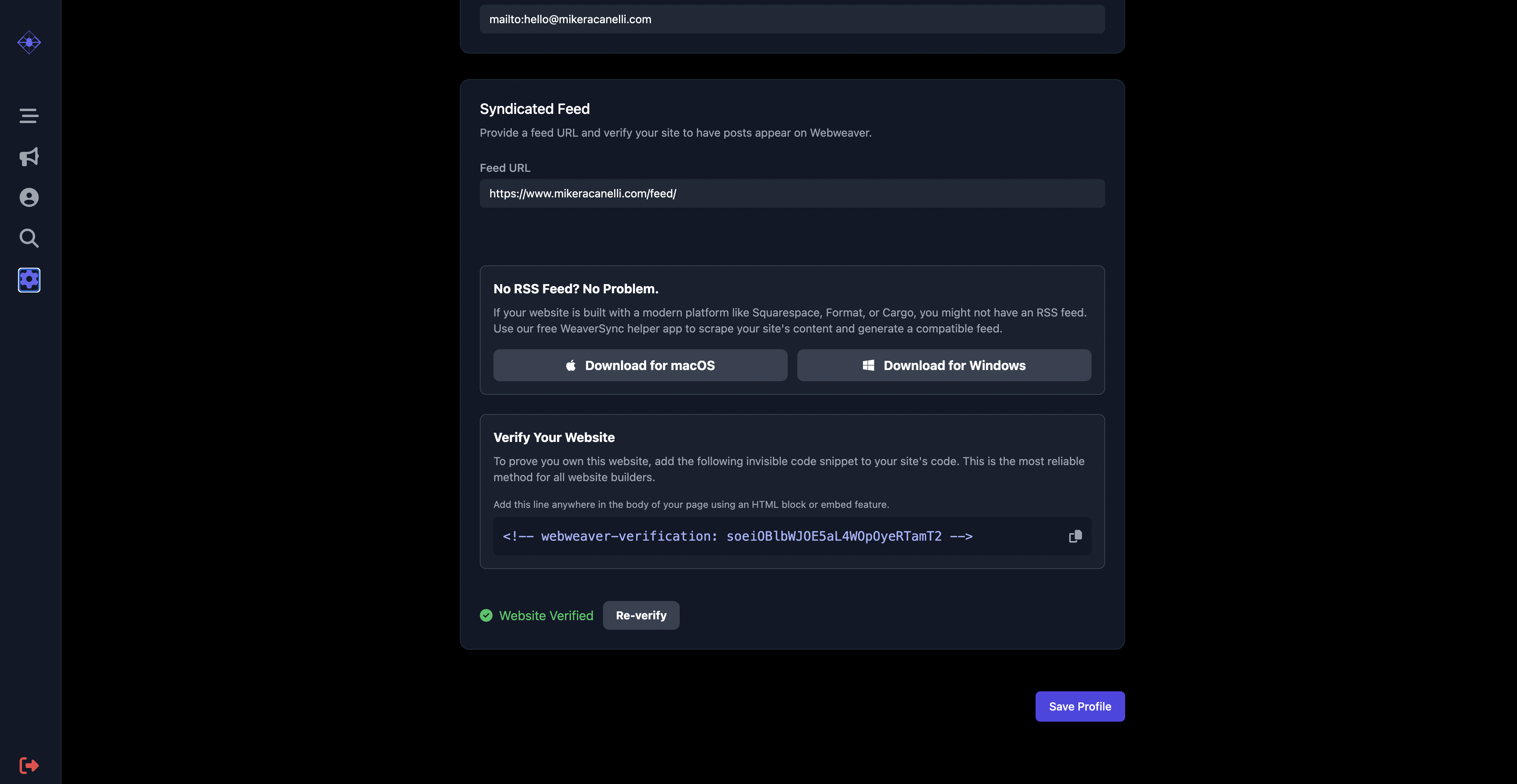
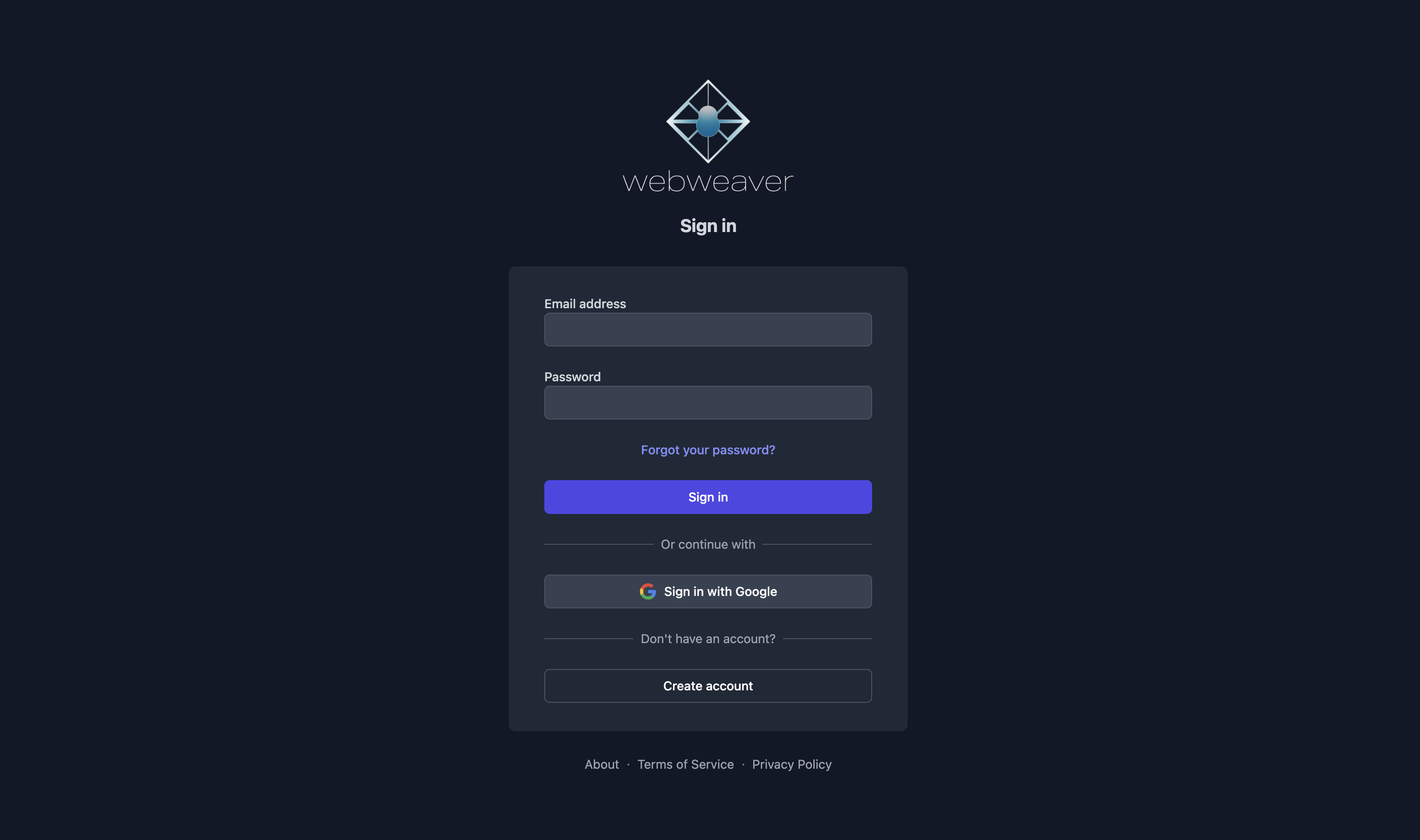
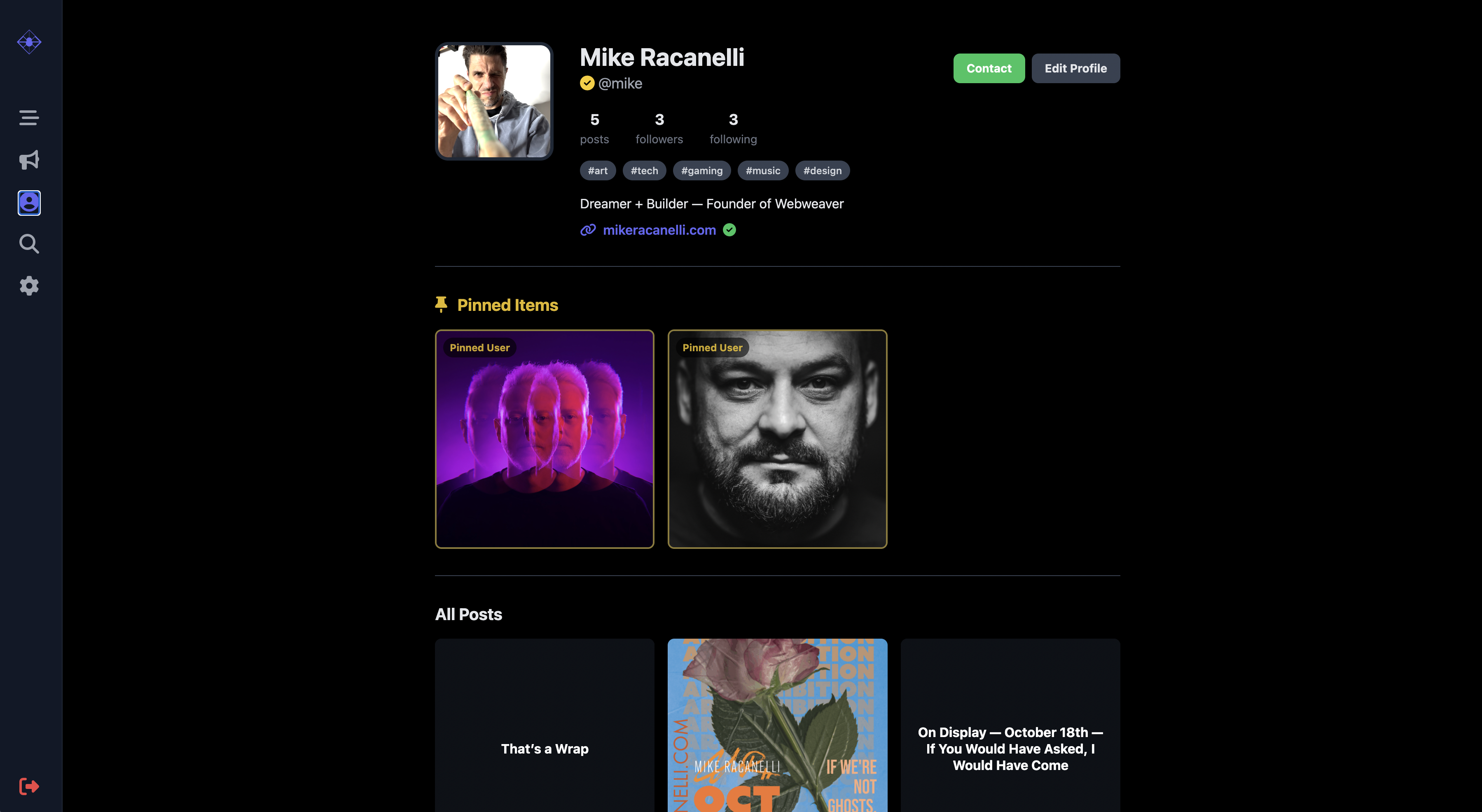
The product philosophy prioritized "Context over Content." I designed a dual-app architecture (iOS via Expo & Web via React) integrated with a scalable Firebase backend. By treating the AI as my junior engineering team, I orchestrated the implementation of complex features—such as DNS-based site verification and cross-platform media rendering—translating my high-fidelity visual designs into a fully native production application.
Webweaver successfully translates the abstract concept of the decentralized web into a tangible, user-friendly product. The platform establishes a new paradigm for digital connection—giving users ownership of their algorithms and creators direct access to their audience. It stands as a functional proof-of-concept for an internet that is open, interoperable, and designed for humans, not advertisers.
Result
Process
My technical foundation runs deep but dormant—built on running BBSs and coding MUDs in C during two years of honors Computer Science over two decades ago. I leveraged this innate systems thinking to adopt a "vibecoding" methodology: I personally owned the entire creative stack (Brand, UX/UI, Design) and directed AI agents to execute the modern syntax. This allowed me to act as both Lead Designer and Technical Architect, ensuring the code served the vision rather than limiting it.
Approach
Challenge
The modern social web has become walled, algorithmic, and rented. Independent creators own their websites but lack discovery, while users are trapped in engagement loops on closed platforms. The challenge was to deconstruct the social feed and rebuild it around open standards (RSS) without sacrificing the fluid, tactile user experience of modern native applications.
Webweaver
A native iOS and web platform that reclaims the open web—bridging the gap between independent publishing and social connection by turning RSS feeds into a cohesive, visual social network.